Chapter 2: Is Matter Around Us Pure?
Separation Techniques - Part 1
Separating Components of Mixtures 🔬
Different methods are used to separate components based on their properties.
1. Evaporation
Used for: Separating volatile solvent from non-volatile solute
Example: Salt from salt solution
Easy Diagram for Exam:
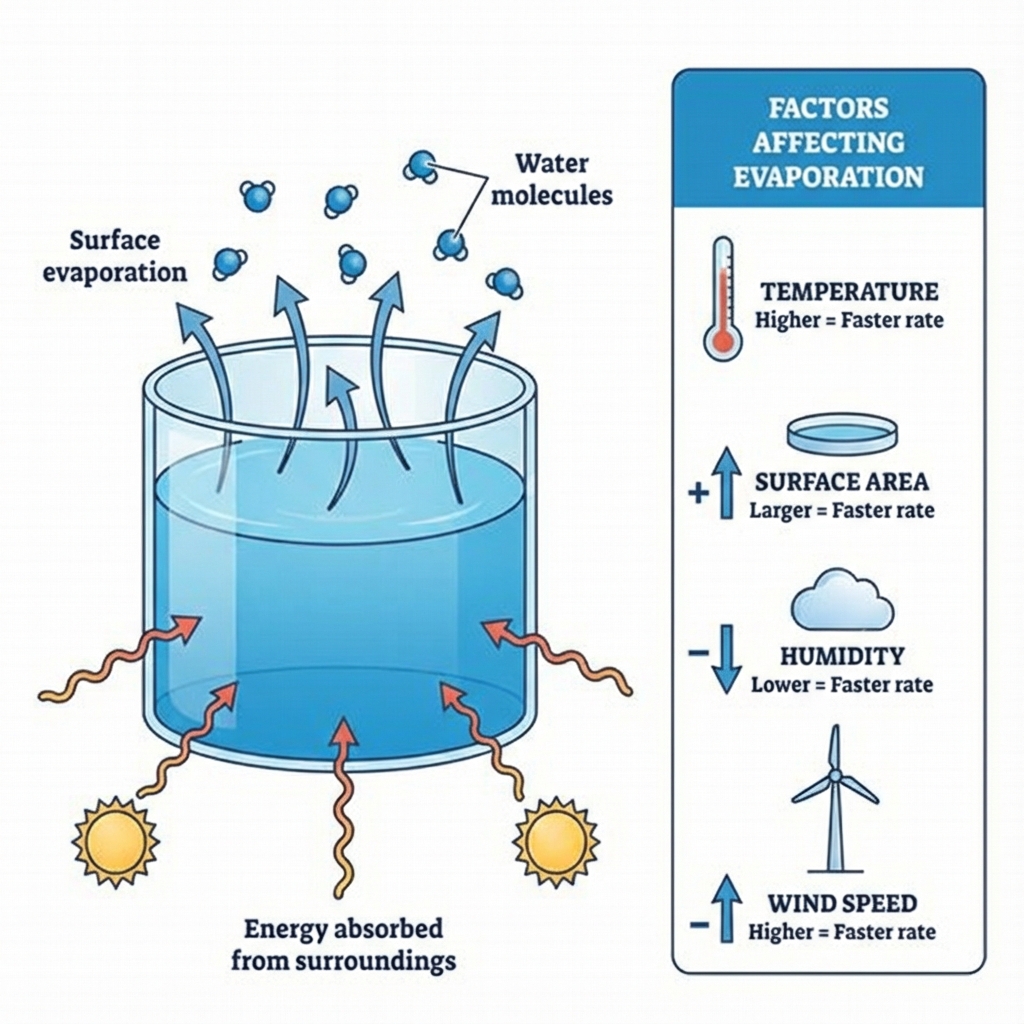
    Heat source + Water evaporates
         ↑     ↑↑↑↑↑
    ┌─────────────────┐
    │  ~~ Salt water ~~│ ← Salt solution
    │   ═══════════    │
    └─────────────────┘
         China dish
              ↓
      Salt remains behind
2. Centrifugation
Used for: Separating small particles that pass through filter paper
Principle: Denser particles forced to bottom when spun rapidly
Diagram for Centrifuge:
         Before Spinning          After Spinning
         ┌───────────┐            ┌───────────┐
         │ ∘ ∘ ∘ ∘ ∘ │            │           │
         │ ∘ ∘ ∘ ∘ ∘ │    →→      │  clear    │
         │ ∘ ∘ ∘ ∘ ∘ │   SPIN     │  liquid   │
         │ ∘ ∘ ∘ ∘ ∘ │            │───────────│
         └───────────┘            │ sediment  │
           Mixed                  └───────────┘
📝 Exam point: Heavier particles settle at bottom
Applications:
- 🥛 Separating cream from milk
- 🩸 Blood and urine tests in labs
3. Separating Funnel
Used for: Separating immiscible liquids (oil and water)
Diagram for Separating Funnel:

           Cap/Stopper
               │
         ┌─────┴─────┐
         │ ░░░░░░░░░ │ ← Oil (lighter, floats)
         │ ░░░░░░░░░ │
         │───────────│ ← Boundary
         │ ▓▓▓▓▓▓▓▓▓ │ ← Water (denser, sinks)
         │ ▓▓▓▓▓▓▓▓▓ │
          \    │    /
           \   │   /
            \  │  /
             \ │ /
              \│/
               ▼
            Stopcock
               │
          Water drains
            first
📝 Important: Water (denser) at bottom, oil (lighter) at top
4. Sublimation
Used for: Separating substances that sublime (solid → gas directly)
Diagram for Sublimation:
        ┌─────────────────┐
        │  Inverted funnel │ ← Camphor collects here
        │    ╲       ╱     │
        │     ╲     ╱      │    (as solid again)
        │      ╲   ╱       │
        └───────┴───┴──────┘
        ┌─────────────────┐
        │ Camphor + Salt  │
        │   ● ○ ● ○ ● ○   │
        └─────────────────┘
              🔥 Heat

        Salt remains, Camphor deposits on funnel
Sublimable substances: Camphor, Naphthalene, Ammonium chloride